Former captains criticise India’s saffron hockey jersey for World Cup
Former Indian hockey captains Pargat Singh and Dhanraj Pillay criticise the team’s new saffron jersey for the World Cup, advocating for the traditional blue. Re
'India's identity has always been blue': Former captains slam saffron hockey jersey
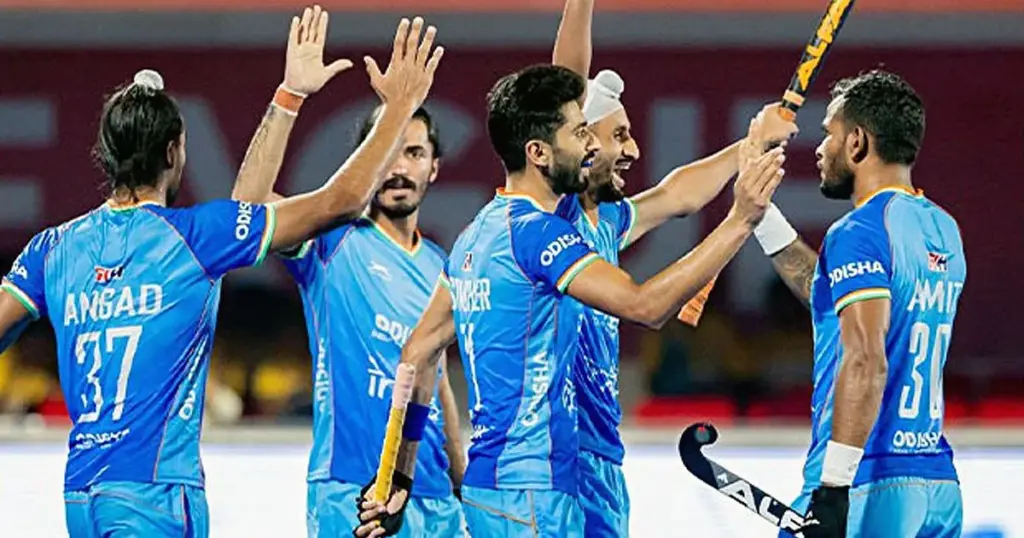
The decision to adopt saffron as the primary jersey colour for the Indian hockey team at the upcoming World Cup has drawn criticism from former captains, including Pargat Singh and Dhanraj Pillay. Both individuals have stated that the blue jersey has historically been the team’s identity for decades.
The debate began after Hockey India unveiled the new kit for both the men’s and women’s teams in anticipation of the World Cup, which is scheduled to commence on August 15 in the Netherlands and Belgium. The change to saffron as the main strip, rather than the traditional blue, has sparked discussion among former players.
Concerns over traditional identity
Dhanraj Pillay, who represented India in 339 international matches, including four Olympics, four World Cups, and four Champions Trophy tournaments, emphasised the long-standing association of the blue jersey with Indian hockey. He noted that from the 1928 Olympic team through the eras of prominent players like Dhyan Chand, Balbir Singh Sr., Mohammad Shahid, and Zafar Iqbal, and even the 1980 Moscow Olympic gold medal-winning side, the team consistently played in blue.
Pillay stated that while saffron is an important and auspicious colour as part of the National Flag, it has never been the traditional colour for Indian hockey. He expressed bewilderment regarding the sudden change after many years, highlighting that throughout his nearly 15-year career, the jersey remained blue. He also pointed out that players identify with the traditional colours of their national team, distinguishing it from franchise tournaments like the IPL or Hockey India League where teams wear varied colours.
Pargat Singh, another former India captain, was more direct in his criticism of the move. He suggested that the change was part of a broader trend of ‘saffronisation’ affecting various sectors, including education, history, and now sports. Singh stressed that sports should unite people and transcend religion, caste, and politics, expressing concern if such ideologies were to influence sports.
Rejection of official explanations
Hockey India has defended its decision, citing technical feedback from coaches and players, as well as the symbolic value of saffron as a colour in the National Flag. However, Pillay dismissed the argument that the change was necessary due to hockey being played on blue astro turf. He noted that the team has played on blue turf for several years without any issues related to jersey colour visibility. He also questioned if there were any directives from the FIH indicating difficulties with a blue jersey on blue turf.
Pargat Singh also rejected Hockey India’s explanation regarding improved visibility on blue turf. He stated that he had never encountered such an issue during his playing days. He further questioned why, if visibility was a concern, only saffron was chosen, implying that other options might have been available. Singh also cast doubt on the claim that the decision was based on recommendations from players and coaches, suggesting that such recommendations are not typical for jersey colour changes.
Both former captains underscored that the blue jersey has been the consistent identity of Indian hockey across generations. Pargat Singh highlighted that iconic photographs of Indian hockey invariably show players in blue, and even during their playing days, training was conducted in blue. He added that while India traditionally had a white change kit, the saffron jersey is now registered as the primary strip, a decision for which he sees no logical basis.
Dhanraj Pillay recalled a rare instance during the 1992 Barcelona Olympics where India wore a yellow shirt with blue shorts in a match against Argentina, noting it as an exception to the long-standing blue tradition.
Source: timesofindia.indiatimes.com

Rohan Gupta
Sports Reporter