Glasgow: Tejaswin Shankar secures India’s first Commonwealth Games decathlon medal
Tejaswin Shankar makes history, securing India’s first Commonwealth Games decathlon medal with a bronze in Glasgow despite a knee injury. He scored 7,976 points
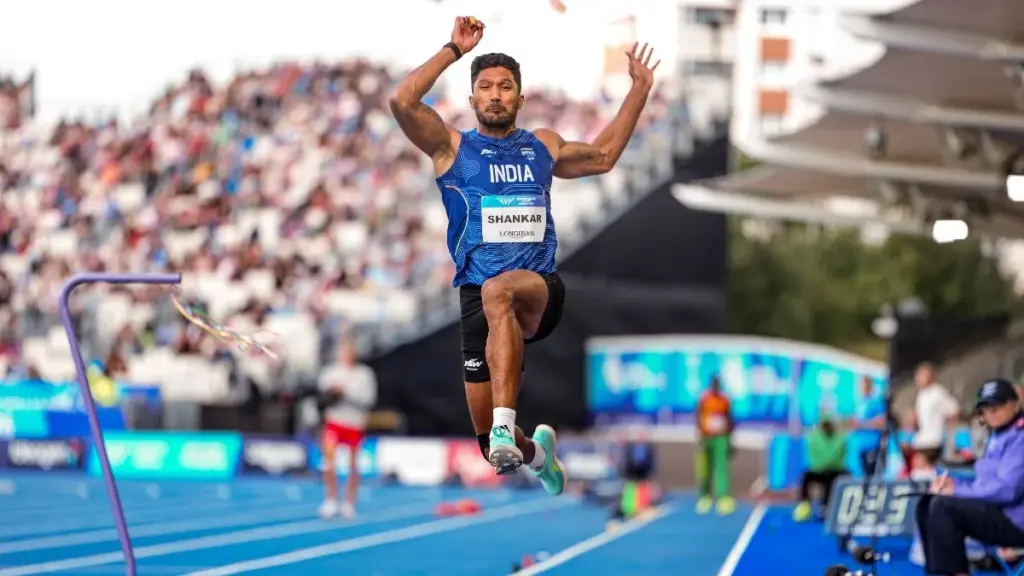
Commonwealth Games: Tejaswin becomes first Indian to win decathlon medal with bronze
Shankar’s Decathlon Achievement
Tejaswin Shankar has made history by becoming the first Indian athlete to secure a medal in the men’s decathlon at the Commonwealth Games. He earned a bronze medal in Glasgow, despite competing with a persistent knee injury. Shankar accumulated a total of 7,976 points across the 10-event competition, which spans two days.
His participation in the decathlon came despite battling chronic patellar tendinitis, commonly known as jumper’s knee. This injury had previously led him to withdraw from the men’s high jump event earlier in the Games. Shankar expressed his emotional state after being forced to pull out of the high jump following his initial attempt due to the injury.
This bronze medal marks Shankar’s second Commonwealth Games medal, following his bronze in the men’s high jump at the 2022 Birmingham Games. His national record in the decathlon stands at 8,057 points. He also previously won a silver medal in the decathlon at the 2023 Hangzhou Asian Games.
On the first day of the competition, Shankar was in second place after five events, trailing behind Damian Warner of Canada. He moved into third position after the ninth event, the javelin throw, and maintained this standing after finishing fifth in the 1,500m, which was the final event of the decathlon.
Lindon Victor of Grenada, a Paris Olympics bronze medallist, claimed the gold medal with 8,096 points, while Warner secured the silver medal with 8,036 points.
Resilience Amidst Injury and Team Support
Shankar’s journey to the medal was marked by significant challenges due to his knee injury. He initially believed his Commonwealth Games campaign might be over after suffering the injury. However, he refused to give up, participating in five decathlon events on Thursday, July 30.
The support from his fellow Indian athletes played a crucial role in his comeback. During the two days leading up to the event, while he underwent rehabilitation, numerous Indian athletes offered encouragement and checked on his well-being. Shankar noted that every athlete in the contingent checked on him, making him feel as though it was a team sport rather than an individual event.
This support was evident everywhere, from the competition venue to the dining area in the athletes’ village. Shankar highlighted that his teammates had witnessed the emotional toll the injury took on him, with many expressing that they felt bad seeing him break down. This collective support helped Shankar realise that his campaign had become about something larger than just his individual medal prospects.
Shankar expressed his desire for this culture of mutual support to continue in Indian athletics, moving away from a mindset where individual events are seen as separate. He hopes for an environment where athletes celebrate each other’s successes and provide support during difficult times, aiming for the next generation of sports to embody this team spirit.
Despite a slow start in the 100m sprint, where he clocked 10.96s, Shankar demonstrated remarkable resilience. He achieved a personal best of 7.82m in the long jump and delivered a strong performance of 2.15m in his signature high jump event. This high jump performance was particularly significant, as it was the same event he had been forced to miss due to his injury.
After the first five events, Shankar was in second place with 4,339 points, just 14 points behind Warner, and maintaining a lead of 90 points over Sammy Ball of England. This position was notable given his injury and the challenging start to the decathlon.
Shankar reflected on his experience, stating that he enjoys the challenge and the competitiveness. He aims to regain this feeling, become fitter and healthier, and pursue a gold medal in the Asian Games.
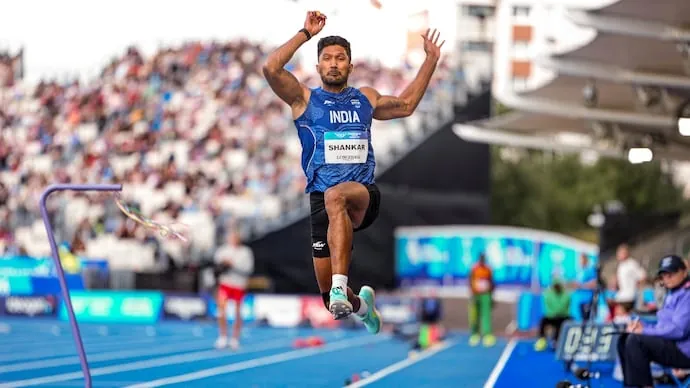
The Spirit of Competition
Shankar described his experience as an “adrenalin junkie,” enjoying the challenge, particularly during the 1,500m, the final event. He emphasized his desire to chase success, even when it is not guaranteed. This competitive spirit, combined with the support from his teammates, fueled his performance.
The decathlon began with Shankar clocking 10.96s in the 100m sprint. He later admitted that during the 400m sprint, he felt a significant burden after the 300m mark, completing it in 49.51s. However, his strong performances in other events, including a 13.09m effort in the shot put, kept him in medal contention.
The support from the Indian contingent transformed his individual challenge into a collective effort. Shankar noted that this experience made him realize the importance of a team approach in a sport often focused on individual achievements. He is grateful that his teammates have embraced this collaborative spirit.
As Shankar prepared for the pole vault, javelin, and other remaining events, he was not only competing against other athletes but also carrying the collective support of his contingent. This sense of unity became a significant takeaway from the initial day of his decathlon competition.
Shankar’s performance in Glasgow highlights the resilience required in high-level athletics and the impact of team support on individual achievements. He aims to continue this pursuit of excellence in future competitions.
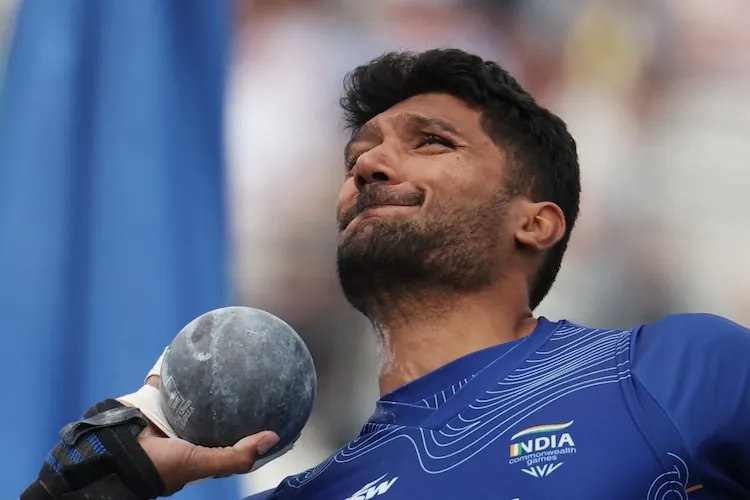
His achievement marks a significant milestone for India in the Commonwealth Games.
Source: timesofindia.indiatimes.com

Rohan Gupta
Sports Reporter